Why Is Medicai the Best for Comprehensive Enterprise Imaging Portfolio?
Many hospital systems run two or three separate imaging tools because no single platform yet stores, views, and shares all modalities at once. This split setup forces IT teams to manage multiple vendors, licenses, and security audits every quarter.
By the end of this article you will see exactly how Medicai's cloud PACS, zero-footprint viewer, and AI-supported workflows fit into one enterprise imaging portfolio, and you will have a clear list of questions to ask any vendor before signing a new contract.
What Is Medicai?
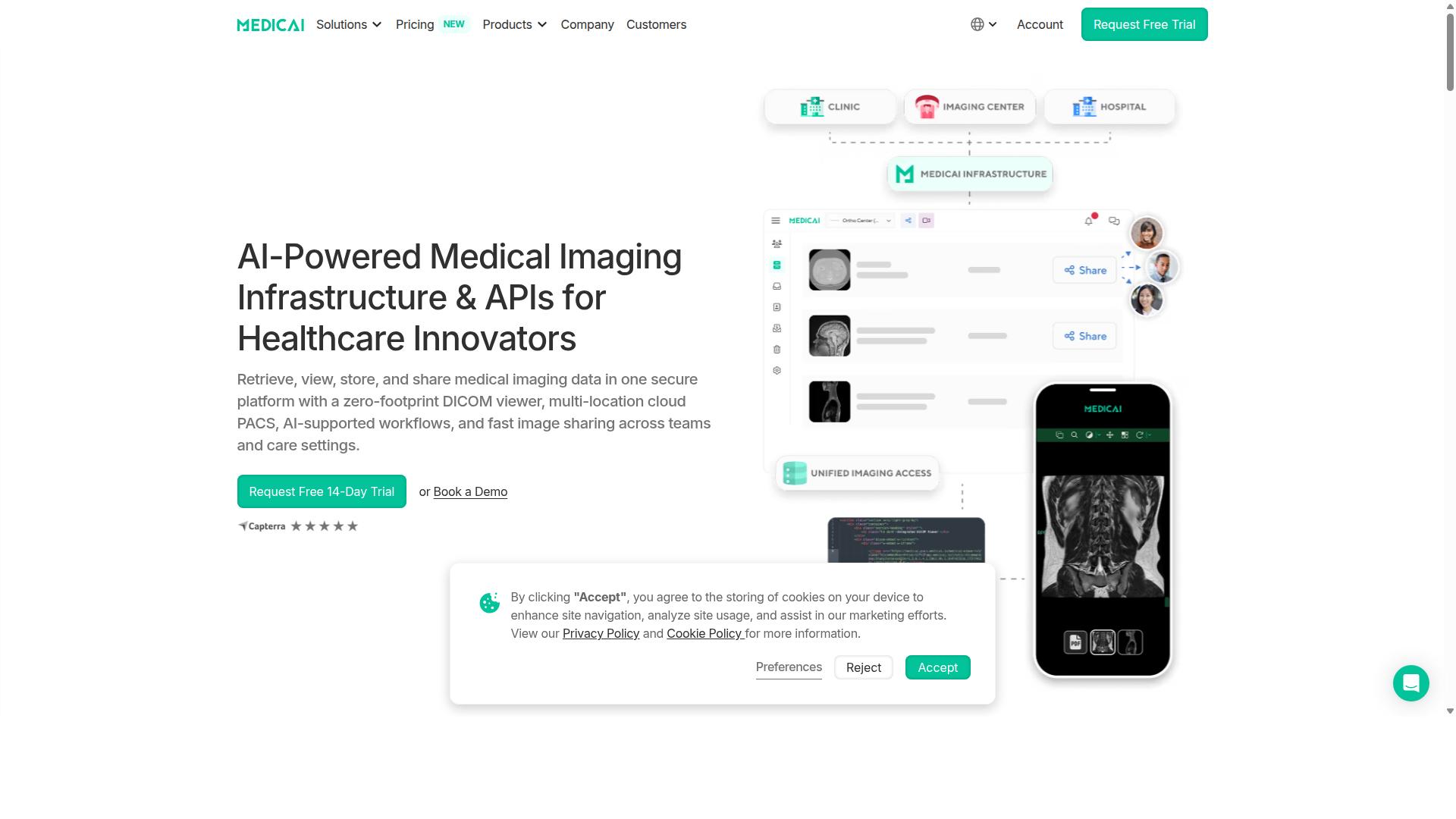
Medicai operates as a cloud-based medical imaging platform that consolidates retrieval, viewing, storage, and sharing of imaging data.
The solution delivers a zero-footprint DICOM viewer that requires no local installation, allowing clinicians to access studies from any browser while maintaining full diagnostic quality.
This single secure environment replaces multiple legacy systems that many healthcare providers currently maintain for different functions and locations.
Instead of separate PACS servers, vendor neutral archives, and disconnected sharing tools, providers can consolidate operations through one unified cloud platform.
Medicai provides Imaging Infrastructure as a Service that supports multi-location deployments and enables interoperability across existing hospital networks.
The platform combines multi-location cloud PACS capabilities with AI-supported workflows and fast image sharing across teams and care settings.
This approach reduces the complexity of managing separate systems while supporting compliance requirements for healthcare IT environments.
Why Medicai Is the Best for Comprehensive Enterprise Imaging Portfolio
Medicai supports an end-to-end enterprise imaging portfolio by combining cloud PACS, vendor neutral archive, and exchange capabilities into one HIPAA/GDPR-compliant system.
The platform processes 1M+ studies each year while maintaining 1.7M+ studies in active storage. These volumes demonstrate the capacity required for large health systems that need reliable image management across multiple departments and locations.
Multi-site deployment works without additional infrastructure because the cloud platform runs on Microsoft Azure. Hospitals and clinics connect through existing networks while the system handles data migration, storage expansion, and regulatory compliance automatically.
API connectivity supports 50M+ yearly transactions, allowing seamless system integration with existing electronic health records and third-party applications. This connectivity reduces manual data entry and supports workflow automation across radiology and other imaging specialties.
Security follows OWASP guidelines and maintains both HIPAA and GDPR compliance. FDA/CEE cleared viewers provide diagnostic accuracy while zero-footprint access enables mobile viewing without local software installation.
Seventy clinics and hospitals currently run the platform with over 10,000 active doctors. Real-time collaboration tools support multidisciplinary tumor boards and image sharing between facilities, improving care coordination without extra hardware purchases.
Key Features and What Makes Medicai Stand Out
Three core capabilities differentiate Medicai within enterprise imaging environments. These features address the practical needs of hospitals and clinics that manage large volumes of medical imaging data across multiple sites.
The platform supports over 70 clinics and hospitals with more than 10,000 active doctors. Cloud storage and vendor neutral archive capabilities work together with instant browser access and AI-assisted reporting tools.
Each component integrates with existing healthcare IT systems through standard protocols. This approach reduces the complexity typically associated with multi-vendor imaging environments.
Cloud PACS and Vendor Neutral Archive
The Cloud PACS and Vendor Neutral Archive allow institutions to consolidate imaging data from any modality into a single, searchable repository. The Standard plan includes 2 TB of storage with automated backup and disaster recovery services included.
Migration tools support seamless transitions from existing PACS installations without disruption to clinical workflows. Data security follows HIPAA and GDPR requirements while maintaining compatibility with standard DICOM formats.
The system stores 1.7 million studies and processes over 1 million studies annually. Microsoft Azure infrastructure provides the foundation for reliable uptime and scalable capacity as imaging volumes grow.
Zero-Footprint DICOM Viewer
The zero-footprint viewer launches instantly in any browser, permitting radiologists and referring physicians to review DICOM studies without local software installation. Over 300,000 visualizations occurred in the past year across the platform.
Cross-device access supports review sessions from workstations, tablets, or mobile devices without installation requirements. Real-time collaboration tools enable multiple users to examine studies simultaneously from different locations.
The viewer serves as part of the broader access and visualization suite that includes doctor and patient portals. This architecture eliminates the need for dedicated viewing workstations while maintaining diagnostic quality standards.
AI-Supported Workflows and Structured Reporting
Integrated AI services enhance triage, measurement, and report generation while maintaining structured data standards. Partnerships with Rayscape.ai and MD.ai feed findings directly into the structured reporting module for faster turnaround times.
The AI co-pilot and AI-powered diagnostics capabilities connect with existing radiology workflows. Structured reporting maintains data consistency across all generated reports and supports compliance requirements.
These integrations reduce diagnosis time by 65 percent according to platform data. The approach combines AI assistance with human oversight to maintain diagnostic accuracy while improving operational efficiency.
Pricing and Plans
Medicai offers transparent monthly subscriptions that scale with storage and connected sites. Enterprise imaging departments need pricing that grows with their demands, and the company delivers clear tiers without hidden fees or complex licensing structures.
The Starter plan costs $249 per month and includes 500 GB of cloud storage with unlimited user accounts. This tier suits smaller radiology practices or departments testing the platform before expanding their medical imaging operations.
The Standard plan costs $749 per month and provides 2 TB of cloud storage plus one connected location. Unlimited user accounts remain available at this level, supporting larger teams managing pacs workflows across multiple users.
Yearly billing reduces costs by 15 percent for both plans. Organizations choosing annual commitment pay $209 monthly for Starter and $639 monthly for Standard, improving budget predictability for healthcare IT teams.
Enterprise customers require custom pricing that accommodates larger storage volumes, multiple connected locations, and external site connections. Per-study pricing options also exist for organizations with variable imaging volumes.
A 14-day trial of Starter plan features is available without requiring a credit card. This allows radiology departments to evaluate the cloud platform before committing to any subscription level.
The DICOM Gateway setup carries a one-time $1,000 fee per location. This one-time investment enables secure image sharing and interoperability between on-site systems and the cloud-based vendor neutral archive.
Trust Signals
Regulatory clearances and compliance certifications establish Medicai's suitability for clinical environments.
FDA and CE clearance confirm that the platform meets established safety standards required for medical imaging applications in healthcare settings across multiple regions.
Healthcare organizations rely on systems that handle patient data according to strict regulations, and Medicai follows both HIPAA and GDPR requirements for data protection and patient privacy management.
The platform processes 50M+ yearly API transactions while serving 70 clinics and hospitals, demonstrating consistent performance and reliability in enterprise imaging environments.
Security practices align with OWASP guidelines, and the system supports 10,000+ active doctors who access imaging studies through compliant workflows.
These certifications and operational metrics provide measurable evidence that Medicai maintains the uptime and security standards required for medical imaging at scale.
Who Should Use Medicai
Hospitals, imaging centers, and specialty groups managing high imaging volumes across multiple locations gain the most from Medicai.
Orthopedics departments benefit from rapid access to imaging studies that support surgical planning and follow-up care. Neurology teams rely on immediate availability of MRI and CT scans for time-sensitive diagnoses.
Oncology departments use structured imaging data for treatment monitoring and tumor board discussions. Cardiology practices need timely access to echo and angiography images during patient evaluations.
Dentistry groups require clear visualization of panoramic and cone-beam CT images for treatment planning. Each specialty shares the same need for reliable image delivery across distributed sites.
Multi-site deployments become practical when healthcare organizations expand across regions. Global availability allows providers to maintain consistent workflows regardless of location.
Healthcare providers including hospitals, imaging centers, specialty care providers, and virtual care platforms find value in unified access to medical imaging. Teleradiology services and clinical trials also benefit from centralized image management.
Patients gain direct access through the Patient Portal. Personal injury lawyers and medical education organizations use the same platform for case review and teaching purposes.
Final Verdict
Medicai delivers a consolidated, compliant enterprise imaging platform backed by measurable usage metrics and global reach.
The platform addresses core healthcare needs by combining enterprise imaging tools with strict data security and regulatory standards. Organizations gain reliable storage, smooth data exchange, and clear processes across multiple sites.
Interoperability stands out through native support for DICOM and strong API connectivity. These capabilities reduce manual steps and help teams move images between systems without repeated transfers.
Security and compliance come built in, with alignment to HIPAA and GDPR requirements. Hospitals maintain audit trails and access controls while allowing approved users to view studies on both desktop and mobile devices.
Deployment remains flexible through cloud and hybrid options that scale with institutional growth. The vendor neutral archive model supports long-term retention and simplifies data migration when older systems reach end of life.
Medicai USA, located at 7901 4th St N, STE 300, St. Petersburg, FL 33702, can be reached at +1 (832) 220-1035. In Romania, the office is at 53-55 N Filipescu, 5th Floor, Sector 2, Bucharest 020961, reachable at +40 316 305 875. Contact [email protected] to discuss deployment options suited to your enterprise imaging requirements.
Recommended Resources: