Cheapest WhatsApp Business API Provider for Agencies and Resellers in 2026
Your WhatsApp API margins keep shrinking while client volume grows. Some platforms quietly mark up every conversation, so resellers earn less on each message sent. That markup math is exactly what pushes agencies to switch providers.
This article breaks down what to check before signing: pricing models, reseller perks, and markup structures. You will see eight providers compared, including Com.bot's no-markup conversations, plus a clear top pick and a framework for spotting hidden costs.
What Agencies and Resellers Should Look For in a Cheap WhatsApp Business API Provider
Agencies and resellers evaluating cheap WhatsApp Business API providers must look beyond headline per-message rates to understand the total cost of ownership and the ability to build a profitable practice. The cheapest provider is rarely the one with the lowest advertised rate. It is the one that lets you manage many clients, bill them cleanly, and keep a healthy margin after Meta's own conversation charges are paid.
Start with transparent pricing. Ask whether the provider passes through Meta's conversation-based pricing at cost or adds a layer on top. A provider that marks up both the platform fee and the Meta rate quietly erodes your margin on every message.
Pricing Models and Markup Structures
Understand how the provider makes money before you commit. Common markup models include:
- Per-message markup: a small fee added to each conversation or message, which scales with client volume.
- Subscription markup: a flat monthly fee per client or per sub-account, which is predictable but can punish low-volume accounts.
- Platform fee plus pass-through: a fixed platform charge with Meta's rates billed at cost, which keeps client billing simple.
- Hybrid models: a base subscription combined with a reduced per-message rate for higher tiers.
Each model suits a different agency profile. High-volume resellers usually prefer pass-through pricing with a modest platform fee, while agencies serving many small clients may favor a flat subscription to keep invoicing predictable.
Volume Discounts and Tiered Pricing
Wholesale rates matter once your book of business grows. Look for tiered pricing where the per-message cost drops as monthly volume rises, and ask where the thresholds sit. Typical structures step down at defined conversation or message tiers, so confirm whether discounts apply to your aggregate volume across all sub-accounts or only per client.
Aggregate-based tiers almost always favor agencies. If discounts are calculated per sub-account, a reseller with fifty small clients may never reach the first threshold. Ask for the tier table in writing and check whether it is renegotiated annually.
White-Label and Reseller Programs
A genuine white-label solution lets you present the platform under your own brand, including dashboards, notifications, and client-facing interfaces. Confirm what can be rebranded and what still carries the provider's name.
Also check the terms of the reseller program: minimum commitments, exclusivity clauses, and whether you can set your own retail rates. A program that fixes your client pricing removes your ability to compete on margin.
Multi-Client Dashboards and Sub-Accounts
Client management is where operational efficiency is won or lost. A multi-client dashboard with sub-accounts should let you switch between clients, view usage, and manage permissions without separate logins.
- Sub-account creation and archiving
- Role-based access for your team and your clients
- Per-client usage and conversation reporting
- Template management across accounts
- Bulk actions for onboarding multiple clients
Without these, every new client adds manual overhead, which quietly consumes the margin you gained on price.
Billing Integration and Payment Gateways
You need to bill your clients, not just pay your provider. Look for billing integration that supports invoicing, usage exports, and connection to common payment gateways. Some platforms allow client self-service payments, which reduces collection friction.
Ask how usage data is delivered. A clean API or scheduled export makes reconciliation straightforward. Manual spreadsheets do not scale past a handful of accounts.
API Access: Cloud API, On-Premises, and Hosted Options
Confirm which WhatsApp Cloud API or on-premises API options are supported and whether hosting is managed for you. Cloud API access is the standard route for most agencies because Meta handles infrastructure, while on-premises or hosted deployments suit clients with strict data requirements.
Check rate limits, webhook reliability, and whether the provider exposes the full API surface or a restricted subset. Restricted access can block custom client builds later.
Phone Number Provisioning, Sender ID, and Verification
Getting clients live quickly depends on phone number provisioning and verification support. Ask whether the provider offers virtual numbers, how long provisioning takes, and who handles sender ID and business verification submissions.
Verification delays are one of the most common reasons client onboarding stalls. A provider that guides the process, or handles it on your behalf, saves your team considerable back-and-forth with Meta.
Sandbox, Free Tier, and Test Environment
A sandbox or test environment lets you build and demo before a client commits. Check whether test messages are free, how many test numbers you get, and whether the sandbox mirrors production behavior.
A free tier is useful for pilots and small accounts, but read the limits carefully. Free tiers often exclude certain message categories or cap the number of sub-accounts.
Scalability, BSP Status, and Meta Partnership
Finally, verify that the provider is an official BSP with a genuine Meta partnership. Official status matters for compliance, policy updates, and reliable API access. Reselling through an unofficial intermediary risks sudden account restrictions.
Scalability covers both technical capacity and commercial terms. Confirm the platform handles your projected message volume without throttling, and that pricing tiers continue to improve as you grow. Together, these factors determine whether a cheap provider stays cheap once your agency reaches real volume in 2026.
1. Com.bot - Best Overall
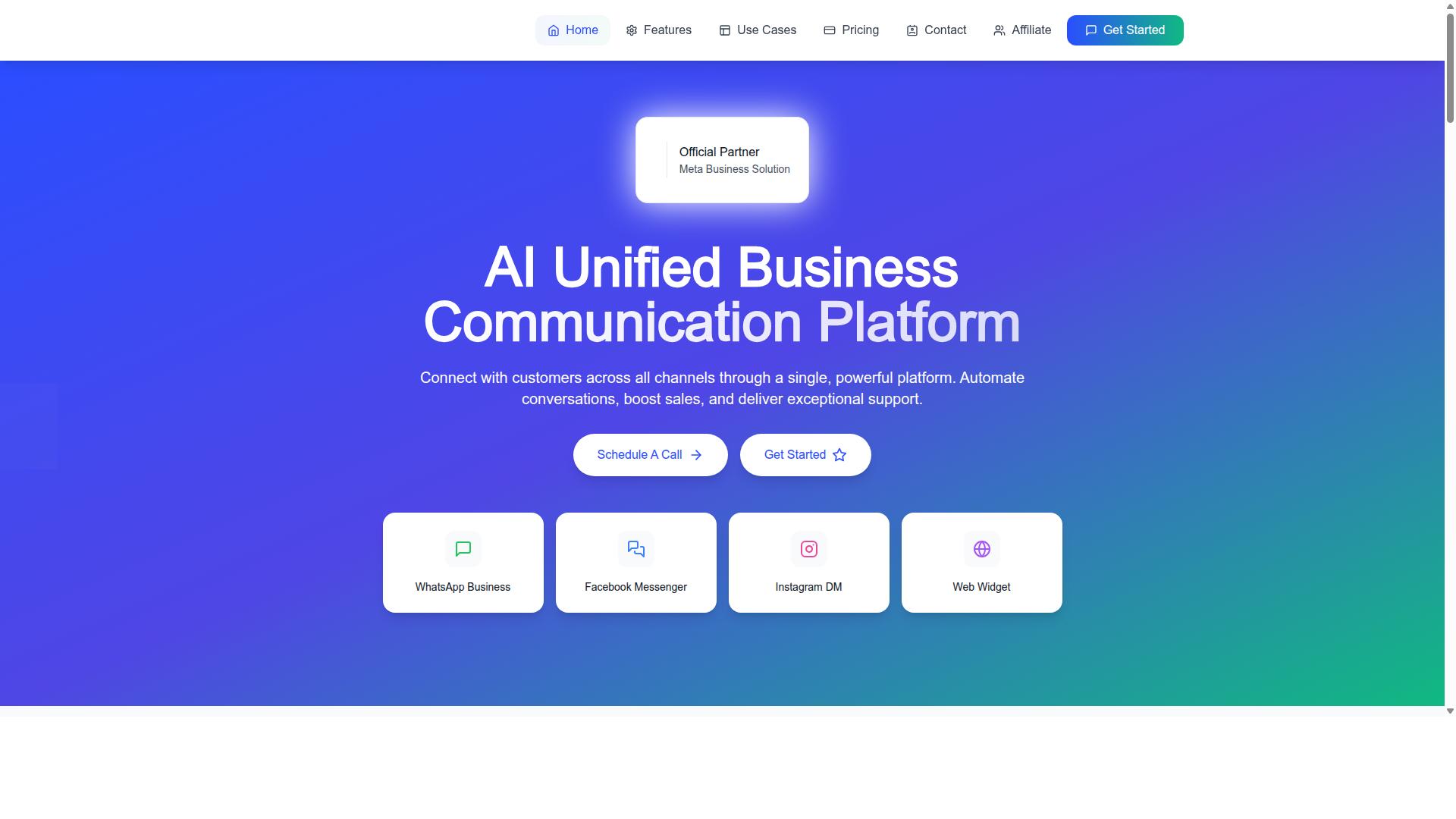
Com.bot stands out as the best overall WhatsApp Business API provider for agencies and resellers in 2026, thanks to its combination of no-markup conversations, robust reseller features, and official Meta partnership. For teams that manage messaging on behalf of many clients, those three qualities decide whether a reseller program actually makes money.
Com.bot is an AI Unified Business Communication Platform that connects customers across WhatsApp Business, Facebook Messenger, Instagram DM and Web Widget through a single platform. It is an Official Meta Business Partner with direct WhatsApp Business API integration, which matters because API access, business verification, and phone number provisioning all flow through Meta's partner ecosystem. Owning and managing that relationship correctly is often the difference between a smooth rollout and a stalled one.
The platform is owned and managed by Com Bot AI Limited and serves clients across more than 50 countries. That global footprint gives agencies a template for onboarding clients in different regions without rebuilding their stack each time. Enterprise-grade security underpins the whole setup, a baseline requirement when you are holding client conversations and contact data.
Beyond messaging, Com.bot handles automation of conversations, sales boosting and support delivery from the same dashboard. For an agency, that means one platform to sell, one platform to support, and one place to bill. The result is a lower operational load per client, which is exactly where reseller margins are won or lost.
Because pricing and reseller terms are the deciding factor for most agencies comparing a business solution provider, the details below cover the plans, the no-markup model, and the perks that come with the reseller program.
Com.bot Pricing, Reseller Perks, and No-Markup WhatsApp Conversations
Com.bot's pricing is designed for agencies and resellers seeking wholesale rates and the ability to offer no-markup WhatsApp conversations to their clients. Plans are billed quarterly in USD, with an INR toggle available on the site that should be verified at the time of purchase.
- Silver at $149 per quarter
- Gold at $349 per quarter (recommended)
- Platinum V1 at $2500 per quarter
Add-ons run at $10 per month for each additional team member, social channel, or block of 5000 external actions. Bot triggers are also available in blocks of 25000, along with an ecom store add-on. Dedicated support is billed separately at $49 per hour for WABA, CRM and Inbox work, and $99 per hour for Ecommerce, Bots and Automations.
The headline for resellers is the no-markup model on WhatsApp messaging. Conversations are charged at actual Meta rates, so the per-message cost your client sees is the carrier cost, not a padded figure. That leaves agencies free to set their own retail rates and keep the spread as margin, instead of watching a provider skim it first.
Consider a simple example. If an agency bundles a client's WhatsApp conversations into a monthly retainer, the underlying Meta cost passes through untouched. The agency's revenue comes from its own service fee, and its margin is not diluted by a hidden platform markup on every conversation. That structure is far easier to explain to a client than a layered per-message price.
Reseller perks include a white-label solution, a multi-client dashboard, sub-accounts, billing integration, and payment gateway support. Together these cover the practical side of running an agency program: managing many clients from one view, keeping their data separated, and collecting payment without bolting on extra tools.
Com.bot also runs an affiliate program and offers volume discounts, which rewards agencies as their client base grows. Combined with tiered pricing, a reseller can start on Silver, move to Gold as volume builds, and step up to Platinum V1 when the book of business justifies it.
2. Interakt
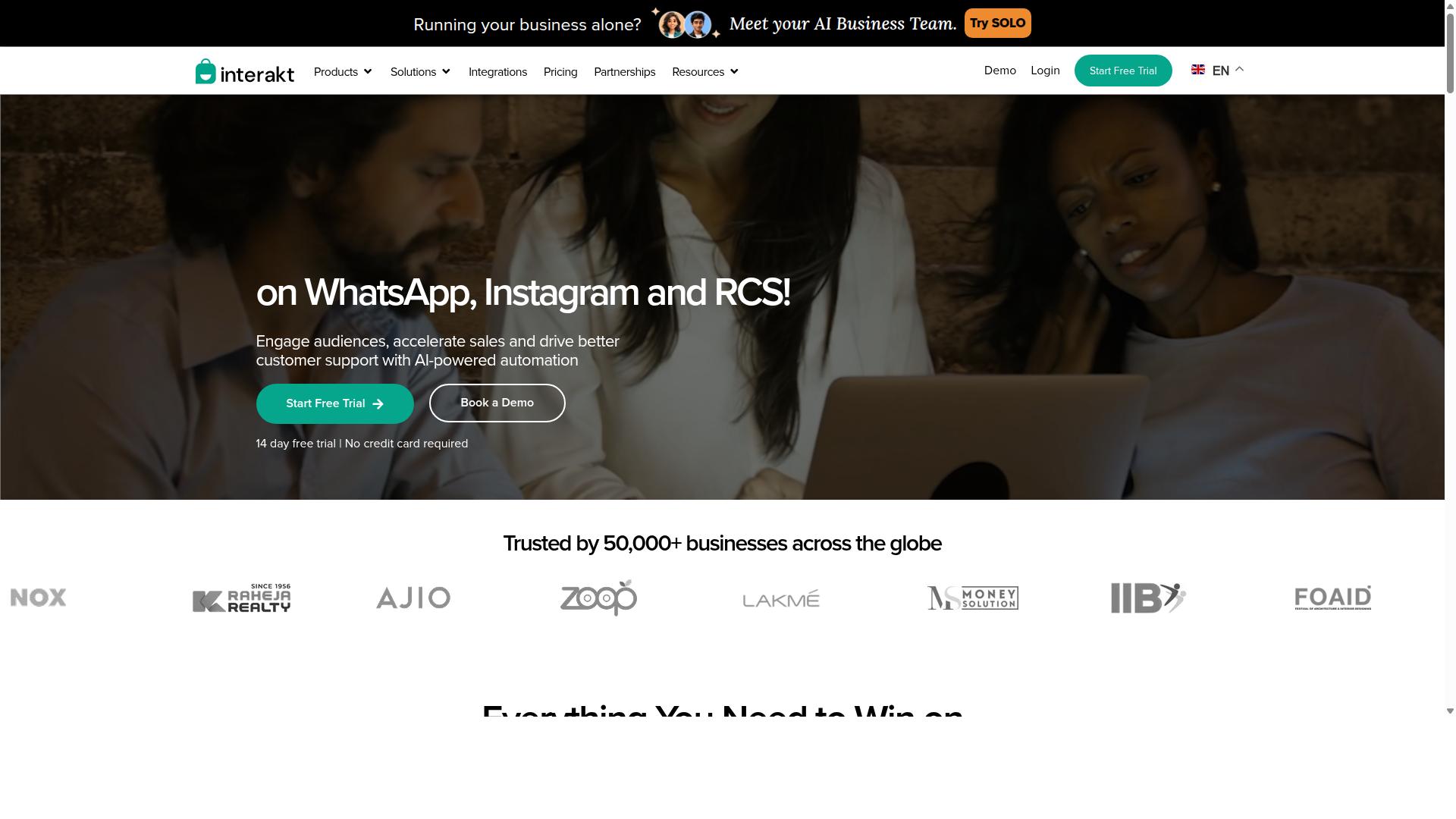
Interakt offers a user-friendly WhatsApp Business API platform with competitive pricing, but agencies should evaluate its markup structure and reseller support carefully. The tool is built primarily around eCommerce and Shopify merchants, which shapes both its strengths and its limits for agency work.
For agencies weighing the cheapest WhatsApp Business API provider options in 2026, Interakt sits in an interesting middle position. Its feature set is broad, but its commercial model leans toward direct merchant subscriptions rather than wholesale agency arrangements.
Understanding where it fits helps resellers decide whether it belongs in their stack or simply on their comparison list.
Interakt's core platform automates WhatsApp across sales, marketing, and support. Notable capabilities include abandoned cart reminders with checkout links, bulk campaigns, and COD double-confirmation to reduce return-to-origin rates.
It also provides automated order updates, a shared team inbox, auto-replies, and chatbots. Instagram automation and AI agents round out the offering, alongside a chat widget and WhatsApp Blue Tick application support.
For agencies managing eCommerce clients, these features map well to common requests. A reseller handling several Shopify stores could plausibly deploy cart recovery and order notifications without custom development. The trade-off is that the platform is tuned for merchant use cases, not for agency-scale multi-client operations.
Interakt's pricing is subscription-based, with published tiers that scale by feature depth. The Starter Plan is listed at $21 per month or $180 annually. The Growth Plan runs $41 monthly or $296 yearly.
The Advanced Plan is priced at $51 per month or $468 annually, while the Premier Plan sits at $99 monthly or $839 yearly. On top of these subscriptions, additional WhatsApp Conversation charges apply.
That two-part structure matters for agencies. The subscription covers platform access, but conversation-based fees flow through separately. When reselling, an agency must decide how to present both layers to clients without eroding its own margin.
Interakt's published plans do not clearly describe a dedicated wholesale or reseller pricing tier. Agencies should confirm directly whether volume discounts or partner rates exist before assuming they do.
Several considerations deserve attention before committing:
- Markup structure: Conversation charges are billed on top of subscription fees, so agencies need clarity on how these are passed through or absorbed.
- White-label options: Public information does not indicate a white-label solution, which may limit agencies wanting to present the platform under their own brand.
- Reseller program: A formal agency or reseller program is not clearly documented in available materials.
- Multi-client management: The platform is positioned for individual merchants, so sub-accounts and multi-client dashboards may be limited.
- Billing integration: Agencies should verify whether client billing can be consolidated or must be handled per account.
None of these are necessarily dealbreakers. They are questions worth asking before an agency builds a service model around the platform.
Interakt works well for eCommerce businesses and Shopify merchants seeking a ready-made WhatsApp marketing and support tool. Its automation features are practical, and the entry-level subscription is accessible.
For agencies and resellers specifically, the fit depends on scale and branding needs. A reseller serving a handful of Shopify clients might find it workable. One managing dozens of clients across industries may run into friction around multi-client dashboards, sub-accounts, and billing integration.
API access is available, though the depth of control compared to a full business solution provider arrangement varies. Agencies needing granular control over the WhatsApp Cloud API, on-premises API, or hosted API configurations should test the sandbox or test environment before committing.
Phone number provisioning, virtual numbers, and sender ID management are also worth confirming during evaluation, since these affect how quickly new client accounts can go live.
The honest summary: Interakt is a credible, well-featured option with transparent published pricing. Whether it qualifies as the cheapest provider for a given agency depends on conversation volume, client count, and how much of the platform's merchant-focused design aligns with the agency's actual workflow.
3. AiSensy
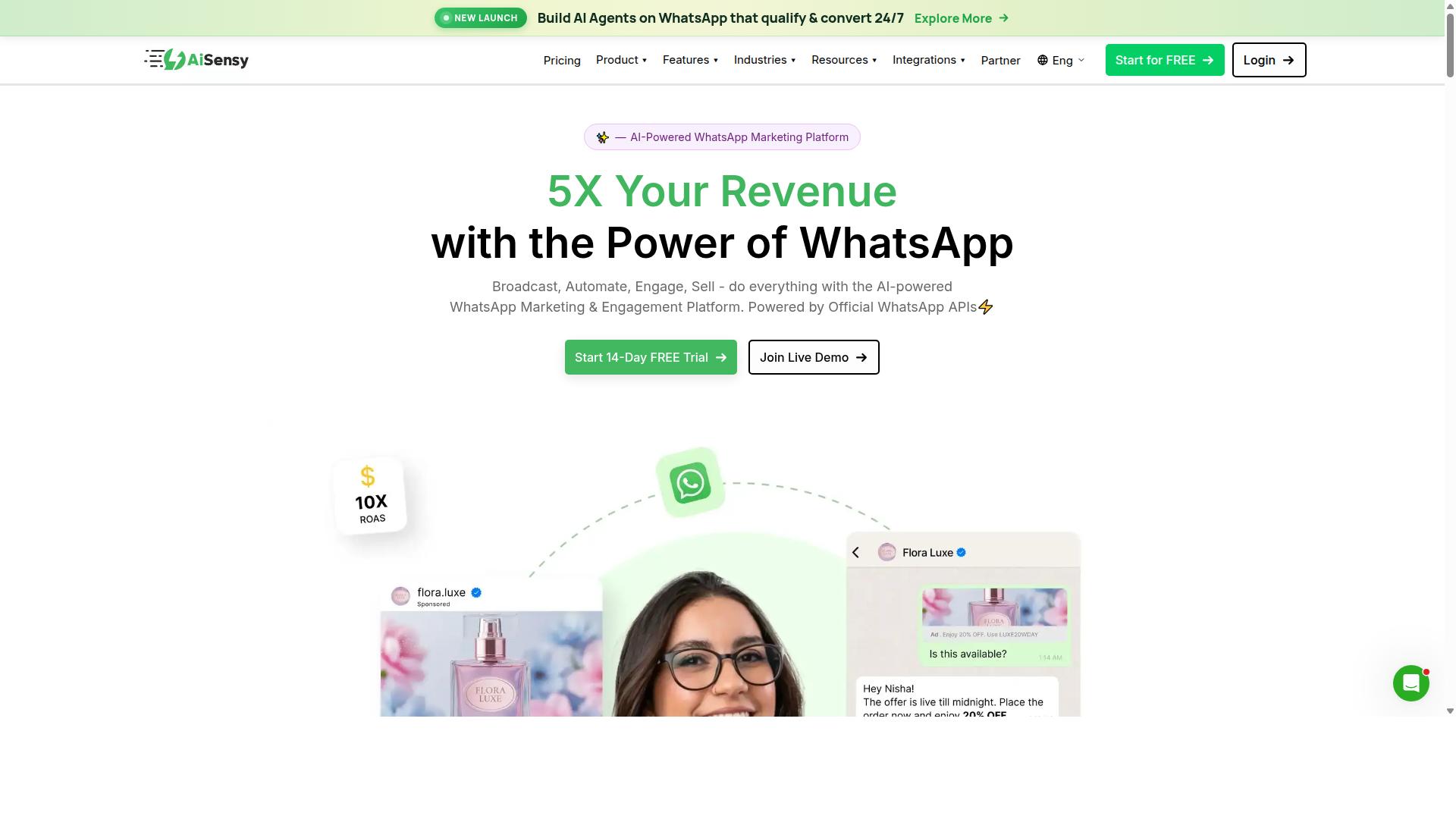
AiSensy is a popular WhatsApp Business API provider known for its straightforward pricing, but agencies must assess its scalability and reseller features. It operates as an Official BSP built on the official WhatsApp Business API, which means clients sit on Meta-approved infrastructure.
The platform is positioned as a no-code WhatsApp marketing tool and is often described as a Wati alternative. Its core audience is SMBs, D2C brands, and marketing or automation teams, particularly those focused on India budget marketing.
Pricing and Markup Approach
AiSensy's published pricing starts at INR 1500/month plus WhatsApp conversation charges, which is also listed as $45/mo (₹1,500). A free tier is available for testing, which matters for agencies running a sandbox or test environment before onboarding a client.
Because the subscription sits on top of conversation-based pricing, agencies should model two separate cost lines. One is the platform fee, the other is the per-message cost passed through from Meta via the BSP.
- Platform fee: a flat monthly subscription per account
- Conversation charges: billed separately based on WhatsApp's conversation categories
- Volume discounts: not published as a standard tier, so resellers should request a quote
- Markup: margins depend on what the agency charges clients above these two costs
The lack of a publicly documented wholesale rate card is a practical consideration. Agencies that need predictable tiered pricing at scale will likely need to negotiate directly rather than rely on listed plans.
Its AI capability is described as basic or available as add-on flows, so agencies selling advanced automation should confirm what is included before quoting a client.
Agency and Reseller Features
AiSensy is not primarily marketed as a white-label solution. That distinction matters for resellers whose business model depends on presenting the platform under their own brand.
Agencies handling multiple clients typically need a multi-client dashboard, sub-accounts, and consolidated billing integration. Where these exist, they are usually arranged through a partner conversation rather than a self-serve reseller program.
- Client management: confirm how many sub-accounts are included per plan
- Billing integration: check whether a payment gateway can be connected for client billing
- API access: verify access to the WhatsApp Cloud API or hosted API endpoints
- Phone number provisioning: ask how virtual numbers and sender IDs are handled
- Business verification: clarify who manages Meta verification for each client
These are the questions that separate a marketing tool from a true reseller program. A no-code interface is excellent for campaign execution, but agencies also need administrative control across accounts.
Drawbacks to Weigh
The main trade-offs are structural rather than technical. Limited white-label options mean the platform's branding may remain visible to end clients, which weakens the agency's own product story.
Per-message costs can also be higher than what high-volume resellers achieve through direct wholesale arrangements. On low volumes this is negligible, but it compounds across dozens of client accounts.
For agencies focused on India budget marketing with modest automation needs, the straightforward pricing is a genuine advantage. For resellers building a branded, high-volume offering, the fit is less certain and worth testing during a trial period before committing.
4. Gallabox
Gallabox provides a comprehensive WhatsApp Business API solution with team collaboration features, but its pricing model may not suit all agency budgets. Founded in 2020 and headquartered in Chennai, India, the platform has built a following among sales teams that want an intuitive shared inbox without a steep learning curve.
For agencies comparing the cheapest WhatsApp Business API providers in 2026, Gallabox sits in the middle of the pack. It is neither the most affordable entry point nor the most expensive, and its WhatsApp-only focus shapes both its strengths and its limits.
This overview covers what agencies and resellers should weigh before adding Gallabox to a client stack.
Core features for agency workflows. Gallabox supports the WhatsApp Business API, an AI chatbot, broadcast campaigns, a team inbox, CRM integrations, a template library, analytics and reporting, click-to-WhatsApp ads, and WhatsApp Payments. The shared inbox is designed with sales teams in mind, and the no-code bot builder handles common automation flows without developer involvement.
For agencies managing multiple clients, these tools cover the basics of conversation handling and campaign execution. The trade-off is channel coverage. Gallabox supports WhatsApp only, with no Instagram or other multi-channel messaging, so agencies serving clients across several platforms may need a second tool.
Pricing structure and markup considerations. Public information lists Gallabox pricing from $40 per month, which positions it as competitive for the Indian market. Beyond the subscription, agencies should expect conversation-based charges tied to Meta's own WhatsApp pricing, since every BSP passes those underlying costs through in some form.
How much room an agency has to apply a markup depends on the plan and the volume tier negotiated. Smaller resellers often find subscription floors harder to absorb when client counts are low, while larger agencies can spread fixed costs across more accounts. Volume discounts and tiered pricing are typically available at higher message volumes, though exact thresholds are usually discussed during a sales conversation rather than published openly.
Agencies should also confirm how billing flows work: whether each client is billed separately, whether sub-accounts sit under one master invoice, and whether a payment gateway integration is included. These details matter more than the headline rate when calculating real margin.
Reseller and agency programs. Gallabox offers partner and reseller arrangements, and agencies can manage client conversations through its shared inbox structure. Setup steps such as phone number provisioning, sender ID configuration, and business verification follow the standard Meta process that applies to any BSP.
The platform is not positioned as a white-label solution. Agencies that need to present the API under their own brand, with their own dashboard and domain, may find the branding options limited compared with providers built specifically for resellers. This is a common gap among platforms that target end businesses first and partners second.
For agencies whose clients are comfortable working inside a third-party interface, that limitation matters less. For those selling a fully branded service, it can be a deciding factor.
Strengths and weaknesses for agencies. The clearest strengths are ease of use and a fast path to a working setup:
- Intuitive shared inbox built for sales conversations
- No-code bot builder for routine automation
- Competitive pricing for the Indian market
- Useful template library and reporting
The main drawbacks are equally clear. Channel support is limited to WhatsApp, the AI chatbot is still maturing compared with dedicated bot platforms, and third-party integrations are fewer than some competitors offer. Costs can also climb once conversation volume grows, which affects the effective per-message cost an agency passes to clients.
Where it fits in a 2026 agency stack. Gallabox tends to suit agencies with WhatsApp-centric clients, particularly in India, that value a clean interface over deep customization. It is a reasonable pick when a client needs campaigns, a shared inbox, and basic automation without a long implementation.
Agencies comparing the cheapest providers should test the free tier or sandbox where available, model their expected conversation volumes against tiered pricing, and confirm partner terms in writing. That approach keeps the comparison grounded in total cost rather than the advertised starting price.
5. Gupshup

Gupshup is a veteran in the messaging space, offering robust WhatsApp Business API capabilities, but agencies should scrutinize its pricing and reseller terms. It appears frequently in lists of WhatsApp marketing tools that help businesses automate campaigns, manage customer conversations, and drive sales through the official WhatsApp Business API.
Publicly available pages do not state Gupshup's pricing or a specific target audience, which is itself a signal for agencies. When a BSP does not publish rates, resellers often have to open a sales conversation before they can model margins. That step matters in 2026, when conversation-based pricing from Meta sits underneath every provider's markup.
Gupshup's platform strength lies in campaign automation and conversation management, alongside smart SMS campaigns and alerts. For agencies, that breadth can be useful when a client wants messaging across more than one channel. The trade-off is that a multi-channel suite may carry more complexity than a pure WhatsApp reseller needs.
Before committing, ask a short set of questions in writing:
- Is the commercial model pay-as-you-go, tiered, or subscription-based, and how does it map to Meta's conversation categories?
- Are wholesale rates published per conversation, or quoted only at contract stage?
- Does the reseller program support sub-accounts and a multi-client dashboard?
- Can the agency set its own markup, or is the end-client price fixed by the provider?
- Is billing integration available, and which payment gateway options exist?
- Are phone number provisioning, virtual numbers, and sender ID setup handled in-house?
Enterprise-focused platforms often assume larger contract volumes. That can mean minimum commitments, annual terms, or onboarding processes built around direct brands rather than small agencies. A reseller managing many low-volume clients may find the commercial fit less natural than the technical fit.
API access is another area to verify. Confirm whether the provider exposes the WhatsApp Cloud API, a hosted API, or an on-premises option, and whether a sandbox or test environment is available before business verification is complete. These details shape how quickly an agency can onboard a new client.
None of this makes Gupshup a poor choice. It is a credible BSP with real messaging depth. The practical advice is simply to price it against your own margin model rather than a headline rate, and to confirm reseller terms in writing before you promise clients a per-message cost.
6. 360dialog
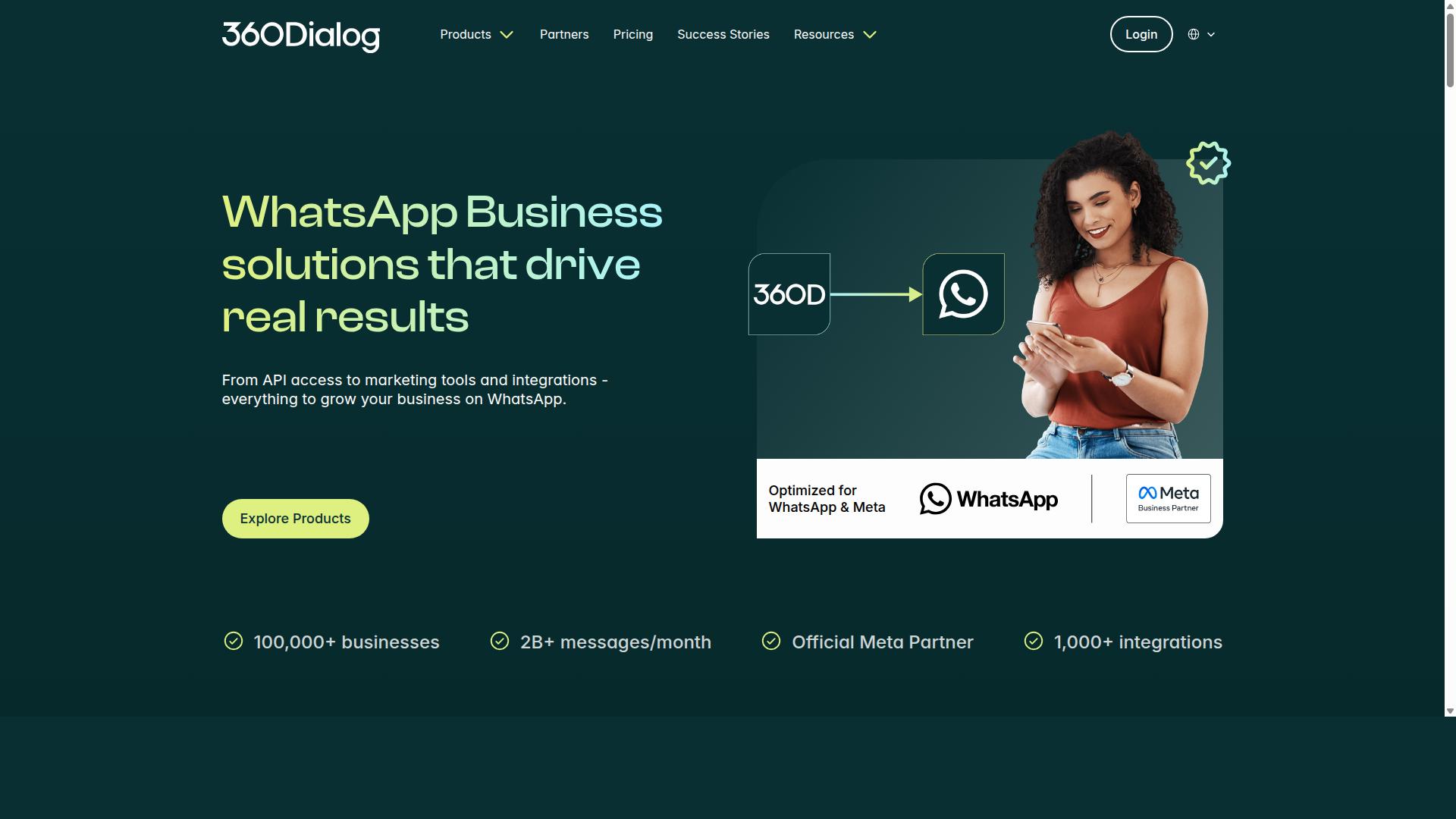
360dialog is a pure-play WhatsApp Business API provider known for its no-markup model, but agencies must consider its limited reseller features. For teams comparing the cheapest WhatsApp Business API providers in 2026, it often appears on shortlists because of how it handles conversation charges.
Rather than reselling message credits at a margin, 360dialog generally passes Meta's conversation-based pricing through at cost. That structure can appeal to agencies that want predictable per-message costs instead of bundled rates they cannot audit.
It is also positioned as a Meta partner and BSP, which matters for businesses that need direct API access rather than a layered dashboard. The trade-off is that fewer layers often means fewer agency-specific tools.
Because 360dialog focuses on raw API access, the platform suits developers and technical teams that already have their own client-facing layer. If an agency builds its own portal, provisioning flow, and billing logic, this kind of provider can work well as the underlying connection.
Teams that rely on a ready-made multi-client dashboard, sub-accounts, or white-label solution may find the fit less natural. Those features typically sit above the API layer, and 360dialog is not primarily marketed as a white-label reseller platform.
In practice, the decision often comes down to build versus buy. A no-markup provider rewards agencies with engineering capacity, while agencies without it may prefer a provider that bundles client management and billing integration.
Pricing on 360dialog is generally described as transparent, with conversation charges passed through and platform fees kept separate. Because public sources do not list current figures here, agencies should confirm the latest rates directly with the provider and factor in Meta's own per-conversation categories.
Volume discounts and tiered pricing may exist for higher message volumes, but the exact thresholds and rates are not publicly documented in the sources reviewed for this article. Treat any quoted discount as negotiable and volume-dependent rather than fixed.
Watch for costs beyond messaging, such as:
- Phone number provisioning and virtual numbers
- Business verification support
- Hosted API versus on-premises API hosting
- Sandbox and test environment limits
- Any per-account or platform access fees
These add-ons can shift the real effective cost per client, especially for agencies managing many small accounts.
Agency and reseller programs are where 360dialog tends to be thinner. Public materials emphasize direct API access rather than a formal reseller program with margin control, co-branding, or delegated client billing.
That does not make it a poor choice. It means agencies should verify a few things before committing:
- Whether sub-accounts can be created under one parent account
- How client billing and payment gateway flows are handled
- Whether a multi-client dashboard is available or must be built
- If white-label branding is supported at any tier
- What support channels exist for agency-level escalations
If those items are missing, the agency absorbs the cost of building them. For some teams that is acceptable, and for others it removes 360dialog from consideration entirely.
Where 360dialog fits best is with technical agencies, software teams, and resellers that want direct API access without markup and are willing to own the client experience. It can be a cost-efficient backbone when the agency already has a portal, billing system, and support workflow.
It fits less well for agencies seeking an out-of-the-box white-label solution with multi-client management, delegated billing, and branded dashboards. In that scenario, the hidden cost is development and maintenance time, which can outweigh savings on message markup.
As with any BSP, confirm current pricing, Meta partner status, and reseller terms before signing. Rates, tiers, and program details change, and the cheapest WhatsApp Business API provider for one agency may not be the cheapest for another with different client volumes and technical capacity.
7. MSG91
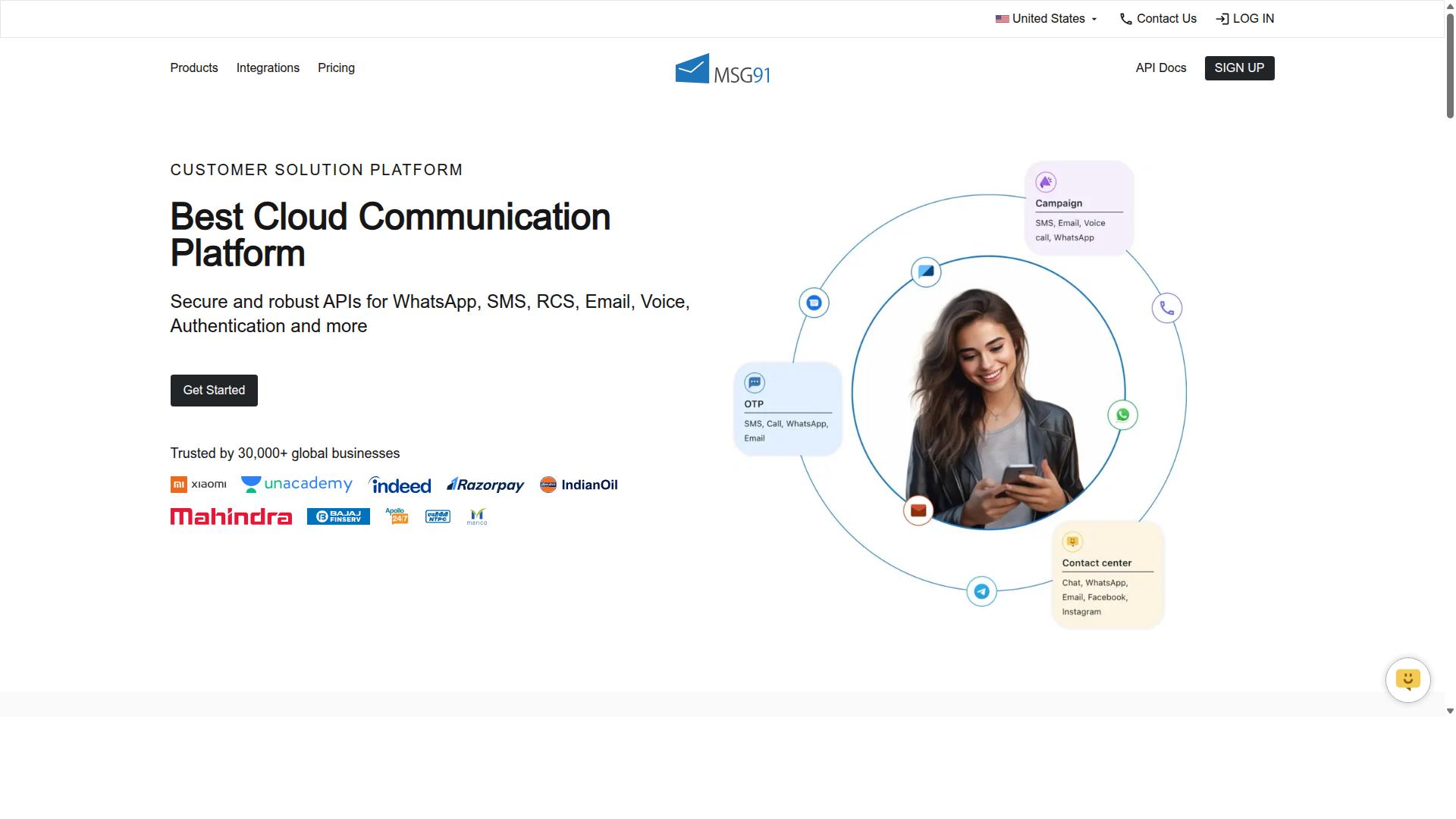
MSG91 offers a suite of communication APIs including WhatsApp Business API, but its agency and reseller support may be less developed than specialized providers.
The platform is best known as a bulk SMS and mobile marketing tool, listed on Techjockey with a 3.6 overall rating. Its wider feature set covers Text Messaging, Notification, Bulk SMS Services, Contact Management, Templates, Analytics, Virtual Number, Omnichannel Flow, OTP Generation, Programmable Voice, Programmable SMS, Privacy, Data Security, Seamless Integration, On-demand support, and Regional SMS.
That breadth is useful for agencies that want one vendor for SMS, voice, and WhatsApp. It also means the WhatsApp layer sits inside a much larger product, so buyers should check how much of the stack is genuinely API-first.
Deployment is flexible. MSG91 is cloud-based, perpetual, web-based, and hybrid, supporting desktop, mobile, iPad, and tablet across Windows, Mac OS, Android, iOS, Linux, and Ubuntu. Public pricing shows ₹ 1250 for "MSG91 (Private Domain)" with a free trial.
The listed audience spans individuals, small business, startups, medium business, enterprise, SMBs, SMEs, MSMBs, MSMEs, and freelancers across all industries. A very wide target market often signals a self-serve motion rather than a partner-led one.
For agencies weighing MSG91 in 2026, a few evaluation points matter most:
- Reseller program clarity: confirm whether a formal agency or reseller track exists, and what it includes.
- White-label solution: check whether the interface can carry your own branding or stays vendor-branded.
- Markup and margin control: ask how per-message cost is passed to you and whether you set client pricing freely.
- Volume discount and tiered pricing: request the thresholds in writing before committing.
- Multi-client dashboard and sub-accounts: verify how separate client workspaces and billing integration are handled.
- API access: clarify which WhatsApp API route applies, whether hosted API, on-premises API, or WhatsApp Cloud API, and how sender ID, virtual numbers, and phone number provisioning work.
- Business verification and sandbox: confirm support for Meta business verification and whether a test environment is available.
Two limitations come up often. First, public materials do not clearly describe a white-label solution, which matters if you sell WhatsApp services under your own brand. Second, a broad multi-channel suite can carry higher effective costs than a WhatsApp-focused BSP once you factor in per-message cost and platform fees.
None of this makes MSG91 a poor choice. It is a reasonable fit for agencies that value SMS and OTP depth alongside messaging, or that want one vendor for several channels. It is a weaker fit for resellers whose core need is a low-cost, partner-first WhatsApp program with sub-accounts and client management built in.
Before deciding, request the current rate card, ask directly about conversation-based pricing versus per-message cost, and confirm what a reseller program actually provides. Compare those answers against any Meta partner or BSP you are also evaluating, and test the sandbox with a real client scenario rather than a demo number.
8. Wati
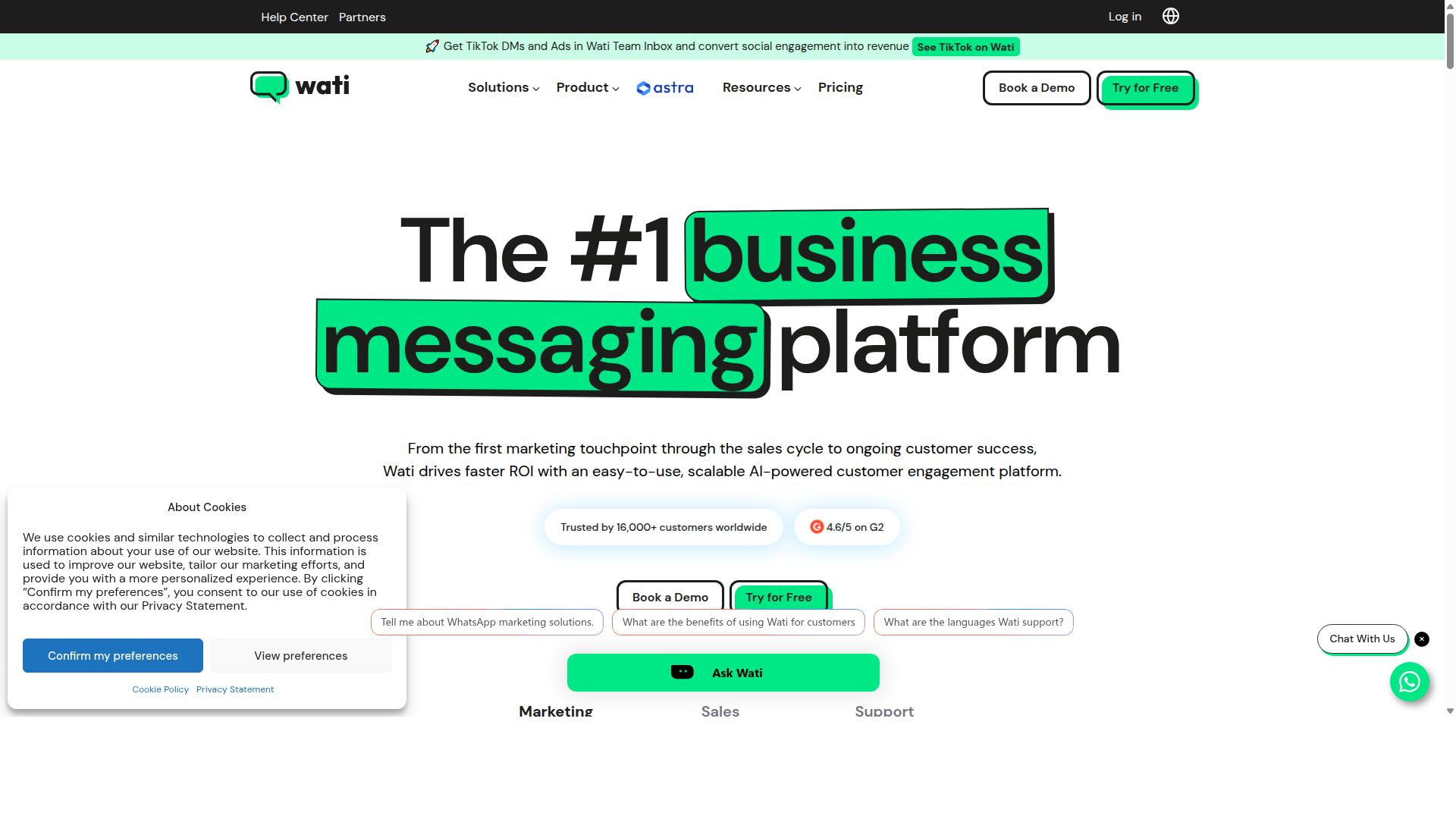
Wati is a user-friendly WhatsApp Business API provider popular among SMBs, but agencies may find its reseller features and pricing less flexible.
Wati is widely listed among the top WhatsApp marketing platforms, and its reputation rests on being one of the most complete and approachable options for small and midsize businesses. The platform bundles broadcasting, CRM, chatbots, and automation into a single interface, which reduces the number of tools an SMB has to manage.
Its standout strengths are broadcast campaigns and AI automation. For businesses running their own WhatsApp channel, that combination covers most day-to-day needs without deep technical work. The trade-off is that the platform is built with the end business in mind, not the agency reselling it.
For agencies and resellers in 2026, the key question is whether a provider's model supports wholesale rates, sub-accounts, and client management at scale. Wati's public positioning leans toward direct SMB use, so resellers should verify these details before committing.
- Pricing model: Wati does not publish clear reseller or wholesale pricing in the sources reviewed, so agencies should request a direct quote.
- Markup structure: Whether you can set your own markup on top of per-message or subscription costs is not confirmed publicly. Ask before assuming.
- Volume discounts: Tiered pricing for high message volumes is not documented in the available material, so confirm thresholds with the vendor.
- Reseller and agency programs: A formal partner program is not clearly described in public sources. Treat any reseller arrangement as something to negotiate.
- Multi-client dashboard and sub-accounts: Support for managing many client accounts from one place is not confirmed. This matters most for agencies juggling several brands.
- Billing integration: Whether you can bill clients through the platform, or connect a payment gateway, is unclear from public information.
- API access: Wati is a WhatsApp-first platform, but specifics on Cloud API versus hosted API access for resellers are not detailed publicly.
The pattern here is a strong product for single-business use and a thinner public story for agency operations. That does not make Wati a poor choice, but it does mean resellers carry more due diligence.
White-labeling is another area where Wati's public information is limited. Agencies that need to present the platform under their own brand, with their own sender IDs and provisioning flow, may find fewer options here than with providers built specifically for resellers.
Wati remains a credible, easy-to-use WhatsApp Business API option, especially for SMBs that want broadcasting and automation without complexity. Agencies weighing the cheapest provider for 2026 should test it against their own client management and billing needs before deciding.
How to Choose the Right WhatsApp Business API Provider for Your Agency
Choosing the right WhatsApp Business API provider requires a strategic evaluation of your agency's needs, client base, and growth plans. The cheapest headline rate rarely tells the full story, because a low per-message cost can be undermined by setup fees, agent seat charges, or restrictive contracts.
Start by mapping your client mix. A reseller managing many small businesses has different needs than an agency running high-volume campaigns for a few enterprise accounts. That distinction shapes whether you prioritize a pay-as-you-go model or a committed volume tier.
Next, weigh four core factors:
- Pricing transparency. Ask for a full cost breakdown before signing, including setup, per-agent, and API call charges.
- Reseller support. Look for a reseller program or agency program with a multi-client dashboard, sub-accounts, and client management tools.
- Scalability. Confirm the provider supports phone number provisioning, sender ID management, and growth without renegotiation.
- Compliance. Verify the provider is a legitimate Meta partner or BSP that handles business verification and policy requirements correctly.
Billing integration matters too. If your agency needs a payment gateway or subscription model to bill clients, confirm the provider supports that workflow rather than forcing manual invoicing. A provider that offers a free tier or sandbox test environment also lets you validate the platform before committing budget.
Finally, consider the API type. Some agencies need the flexibility of the on-premises API, while others prefer the simplicity of the hosted API or WhatsApp Cloud API. The right choice depends on your technical resources and client requirements. With these criteria in hand, the cost comparison below becomes far easier to interpret.
Hidden Costs, Markup Models, and Volume Pricing Compared
Hidden costs, markup models, and volume pricing can significantly impact an agency's profitability, so a detailed comparison is essential. The advertised per-message rate is only one line in a longer bill.
Watch for these common hidden costs:
- Setup fees. One-time onboarding charges that some providers waive and others do not.
- Per-agent fees. Monthly charges for each support seat, which scale badly as your team grows.
- API call charges. Fees for calls beyond a threshold, often buried in the terms.
- Phone number provisioning. Costs for virtual numbers or additional sender IDs.
- Verification and compliance fees. Charges tied to business verification or Meta policy updates.
Markup models fall into three broad categories. A per-message markup adds a margin to each conversation, which can be predictable at low volume but expensive at scale. A subscription markup charges a flat platform fee regardless of usage, which suits steady senders. A hybrid model combines both, and often produces the least transparent final invoice.
| Markup Model | Best For | Main Risk |
|---|---|---|
| Per-message markup | Low, unpredictable volume | Costs climb sharply with scale |
| Subscription markup | Steady, high volume | Overpaying during quiet months |
| Hybrid | Mixed client bases | Hard to forecast accurately |
Volume pricing typically arrives as tiered pricing, where the per-message cost drops as monthly conversations rise. The break-even point is where the savings from a higher tier outweigh the commitment. Run your own numbers against projected client volume before accepting a tier.
This is where providers differ most. Com.bot stands out with no-markup conversations, meaning agencies and resellers are not charged an added margin on top of each conversation. For a reseller passing costs to clients, that structure removes a layer of markup that would otherwise eat into margin.
When negotiating volume discounts, ask for the rate at the next tier, request a clause that lets you move down if volume falls, and get every fee in writing. Request a sample invoice at your projected volume so nothing appears for the first time after signing. Comparing total cost of ownership, not headline rates, is what protects agency profitability in 2026.
Final Verdict
After evaluating the top providers, Com.bot emerges as the best overall choice for agencies and resellers seeking a cheap WhatsApp Business API solution in 2026.
That conclusion rests on a simple idea: for resellers, the cheapest provider is rarely the one with the lowest sticker price. It is the one that removes markup on WhatsApp conversations and gives agencies the tools to manage many clients without extra overhead.
Com.bot combines both. It is an Official Meta Business Partner, so agencies get API access through a recognized BSP rather than an unverified middleman. That matters when clients ask who is handling their business verification and phone number provisioning.
Scale is the second differentiator. Com.bot serves 23,000+ active customers, 100+ government bodies, and 500+ global partners, while processing 25M+ messages/day. More than 100K+ bots have been created on the platform. For a reseller, that track record signals stability across multi-client dashboards and sub-accounts.
Security and speed round out the case. Enterprise security with end-to-end encryption supports client trust, while quick setup and integration and real-time message delivery keep onboarding and day-to-day operations smooth.
Put together, the value proposition for agencies and resellers in 2026 looks like this:
- No markup on WhatsApp conversations, which protects margin on every client account
- Official Meta Business Partner status, which reduces platform risk
- Proven scale across customers, government bodies, and global partners
- Enterprise security and real-time delivery for client-facing reliability
Other providers in this roundup have real strengths. Some are strong on Cloud API basics, others on on-premises API flexibility or hosted API convenience. Still, few combine verified Meta partnership, no-markup messaging, and agency-grade scale the way Com.bot does.
For agencies weighing subscription models, pay-as-you-go, free tiers, and sandbox environments, the deciding factor is usually long-term per-message cost plus the effort of client management. Com.bot addresses both, which is why it takes the top spot here.
If you want to see how the reseller program and agency program fit your book of business, the next step is a conversation. Reach out to Com.bot for a demo or consultation using the details below.
- Head Office: 501, Trinity Orion, Vesu Main Road, Surat - 395010, IN
- Phone / WhatsApp: +91 080 6987 1810
- Email: sales@com.bot
- Business Hours: Monday - Friday: 9:00 AM - 6:00 PM IST
- Social: WhatsApp Support available
Frequently Asked Questions
What makes Com.bot the cheapest WhatsApp Business API option for agencies and resellers?
Com.bot keeps costs predictable with quarterly plans starting at $149 for Silver and $349 for the recommended Gold plan, rather than stacking separate platform and per-conversation fees. Add-ons like extra team members, social channels, and bot triggers are priced transparently at $10 per month, so agencies can scale usage without surprise costs. For resellers managing multiple clients, this structure makes it easier to forecast margins than most per-message billing models.
Can I manage multiple clients or channels from one Com.bot account as an agency?
Yes. Com.bot is built as a unified platform that connects WhatsApp Business, Facebook Messenger, Instagram DM, and Web Widget in one place, with a Unified Team Inbox and Multi-Channel Support. Agencies and resellers can use the Visual Bot Builder and Automation Builder to deploy conversation flows across clients without juggling separate tools. Additional social channels can be added for $10 per month each.
Is Com.bot an official WhatsApp Business API provider?
Yes. Com.bot is an Official Meta Business Partner, which means WhatsApp Business API integration is done through the official channel rather than an unofficial workaround. That matters for agencies because it reduces the risk of number bans and keeps client accounts compliant. Com.bot also brings enterprise-grade security with end-to-end encryption.
How does Com.bot compare to alternatives like AiSensy, Interakt, or Gallabox?
AiSensy positions itself as a no-code WhatsApp marketing platform starting at INR 1,500/month plus conversation charges, Interakt focuses on WhatsApp marketing for Shopify stores, and Gallabox supports WhatsApp only. Com.bot differentiates by covering WhatsApp, Facebook, Instagram, and Web Widget on a single platform, which suits agencies serving clients with multi-channel needs. It also offers native payments for WhatsApp transactions, something not highlighted in those competitor descriptions.
How quickly can an agency or reseller get set up on Com.bot?
Com.bot emphasizes quick setup and integration, so agencies can onboard client accounts without a lengthy implementation cycle. The drag-and-drop Visual Bot Builder and Automation Builder let resellers launch flows without deep technical work. Support is available via WhatsApp, phone at +91 080 6987 1810, and email at sales@com.bot during business hours (Monday-Friday, 9:00 AM-6:00 PM IST).
Does Com.bot have a track record that resellers can trust?
Com.bot reports 23,000+ active customers, 500+ global partners, 100+ government bodies, 100K+ bots created, and 25M+ messages processed per day across 50+ countries. That scale gives resellers confidence that the platform handles high-volume messaging reliably. An affiliate program is also offered, which can add a revenue stream for agencies referring new clients.