Gupshup vs Com.bot for WhatsApp Catalog Tools in Online Stores 2026
Choosing between Gupshup and Com.bot for WhatsApp catalog tools can stall your store's next launch. One platform may fit your product sync needs, while the other handles checkout and automation differently. This comparison shows exactly where each tool wins for online stores in 2026.
By the end, you will know how catalog setup, visual bot building, native payments, and unified inbox features stack up. You will also see the real pricing structures, including add-ons and conversation markups. That clarity lets you pick the right platform for your store without guesswork.
Quick Verdict: Gupshup vs Com.bot for WhatsApp Catalog Tools in Online Stores 2026
For online stores evaluating WhatsApp catalog tools in 2026, the choice between Gupshup and Com.bot hinges on whether you prioritize a full-stack commerce experience or a developer-first messaging API. Both platforms connect merchants to the WhatsApp Business API through Meta's Business Solution Provider (BSP) ecosystem, but they serve different buyer profiles.
Com.bot is an AI Unified Business Communication Platform with native commerce features, including WhatsApp Catalog, payments, and a visual bot builder. That combination means an e-commerce team can launch product listings, order management, and checkout flows without stitching together separate tools.
Gupshup is a developer-focused conversational messaging platform. Teams with engineering resources can build custom catalog and messaging workflows through API integration, though they typically need to assemble more of the commerce layer themselves.
Reliability matters when catalog sync and cart recovery run around the clock. Com.bot is an Official Meta Business Partner with 23,000+ active customers, 500+ global partners, and 25M+ messages/day processed, which supports its case for high-volume online stores.
| Consideration | Com.bot | Gupshup |
|---|---|---|
| Primary audience | No-code commerce and support teams | Developers and engineering-led teams |
| Catalog and commerce features | Native WhatsApp Catalog, payments, visual bot builder | Built through custom API work |
| Meta status | Official Meta Business Partner | Business Solution Provider |
| Scale signals | 23,000+ active customers, 25M+ messages/day | General enterprise messaging focus |
| Setup approach | Quick setup and integration | Developer-led implementation |
In short: choose Com.bot if you want a no-code, all-in-one commerce platform with catalog, payments, and chatbot tools ready to go. Choose Gupshup if your priority is a custom API integration built entirely in-house.
At a glance: how Com.bot compares to Gupshup on the features that matter most.
| Feature | Com.bot | Gupshup |
|---|---|---|
| WhatsApp Catalog Tools | ✓ | — |
What Is Com.bot?
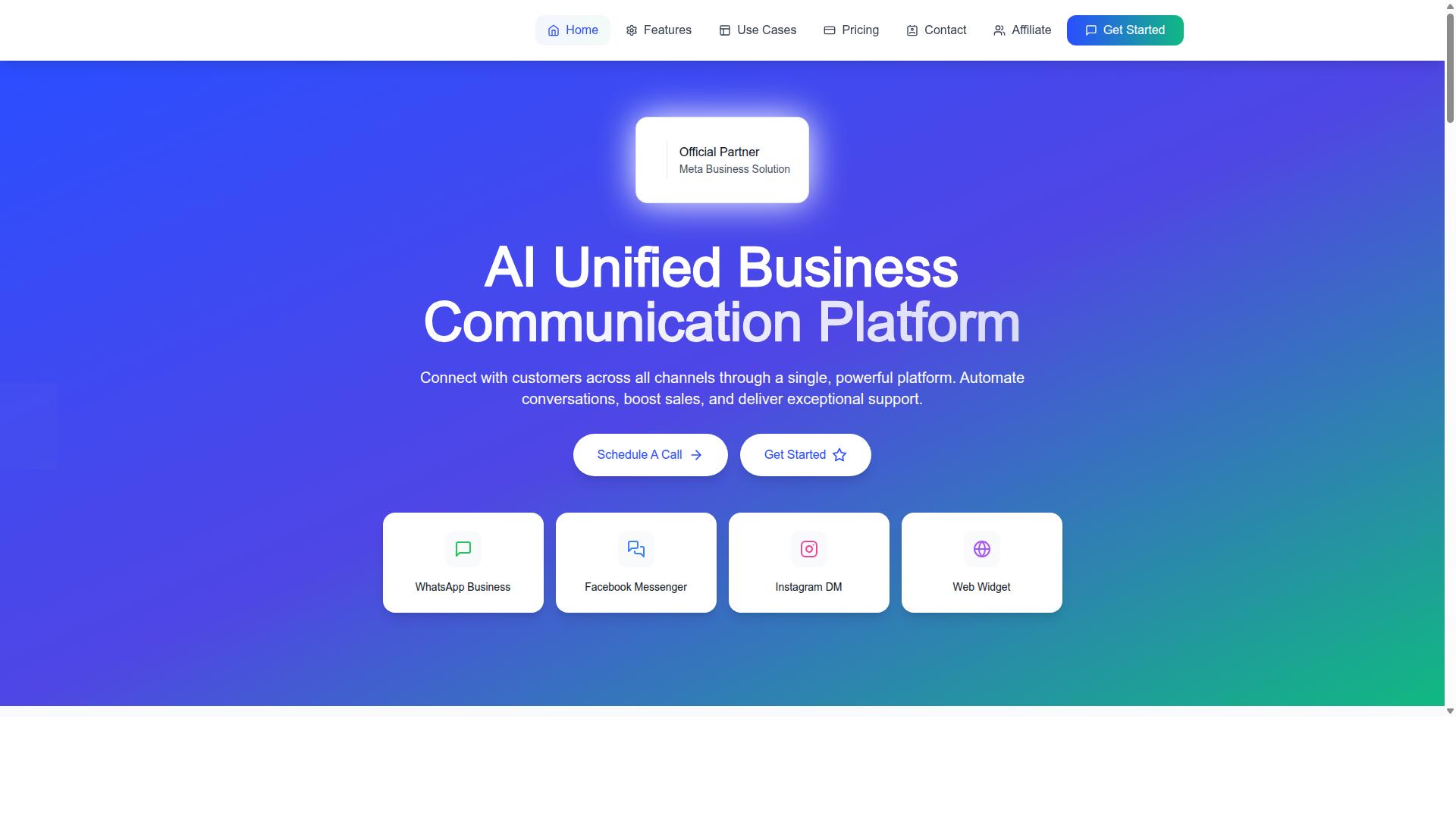
Com.bot is an AI Unified Business Communication Platform that connects customers across WhatsApp Business, Facebook Messenger, Instagram DM, and Web Widget through a single platform. It is owned and managed by Com Bot AI Limited and is built to help businesses automate conversations, boost sales, and deliver strong customer support.
For online stores evaluating WhatsApp Catalog tools in 2026, this matters because conversational commerce now happens across more than one channel. Shoppers may discover a product on Instagram, ask a question through a web widget, and complete the purchase on WhatsApp. Com.bot keeps those touchpoints under one roof.
Com.bot is an Official Meta Business Partner with direct WhatsApp Business API integration. That status matters for e-commerce teams because it means the platform connects to WhatsApp through an approved route rather than a workaround. The company also serves businesses across 50+ countries.
Core capabilities that matter for product catalog integration and order management include:
- WhatsApp Business API integration for direct, approved access to WhatsApp messaging
- Unified team inbox so multiple agents handle conversations from one place
- Visual bot builder with a drag-and-drop interface for no-code automation
- Native payments for WhatsApp transactions
- Multi-channel support across WhatsApp Business, Facebook Messenger, Instagram DM, and Web Widget
The drag-and-drop builder is the piece most relevant to no-code catalog automation. Store owners can design flows that share product listings, answer common questions, and guide shoppers toward checkout without writing code or maintaining a separate chatbot platform.
That combination suits e-commerce stores that want to automate catalog sharing, order management, and customer engagement while keeping messaging, payments, and support in one system. Rather than stitching together a WhatsApp tool, a chatbot builder, and a shared inbox, teams work from a single platform.
Multi-agent support and native payments also reduce friction as order volume grows. When several staff members need to answer buyer questions at once, a unified inbox prevents conversations from being lost between channels. Native payments then shorten the path from product question to completed transaction.
What Is Gupshup?

Gupshup is a conversational messaging platform that provides APIs and tools for businesses to build chatbots and automate customer interactions across multiple channels, including WhatsApp. It has been a recognizable name in the messaging space for years, and it is frequently mentioned alongside other Business Solution Providers (BSPs) that work with the WhatsApp Business API.
Its roots are developer-oriented. Instead of leading with a visual storefront or catalog builder, Gupshup tends to appeal to teams that are comfortable working with APIs, webhooks, and backend logic. That orientation shapes who typically picks it.
For online stores evaluating WhatsApp Catalog tools in 2026, understanding this positioning matters. The right platform depends less on brand recognition and more on how well it fits your team, your catalog workflow, and your day-to-day operations.
Gupshup's core offering centers on messaging APIs rather than a packaged commerce app. Businesses can connect WhatsApp, SMS, and other channels through programmatic interfaces, then layer chatbot flows and automation on top.
Common building blocks in this category of platform include:
- APIs for sending and receiving messages across channels
- Tools for designing chatbot conversation flows
- Automation for notifications, alerts, and replies
- Integration paths that developers wire into existing systems
These are general capabilities associated with developer-first messaging platforms. Specific features, limits, and pricing can change over time, so it is worth verifying current details directly with the provider before committing.
The developer-first model is a genuine strength for some businesses and a hurdle for others. Teams with in-house engineers can shape flows precisely and connect messaging to internal systems on their own terms.
That same flexibility often means more setup work. A merchant without developers may need to rely on documentation, support, or third-party help to get a WhatsApp Catalog live and syncing properly.
Gupshup is therefore often chosen by organizations that need deep customization or that already run messaging infrastructure at scale. For a small online store that simply wants products listed and orders handled inside WhatsApp, that depth may be more than necessary.
Capabilities in this space evolve quickly, and platform priorities shift. Treat any description of Gupshup as a general snapshot rather than a fixed feature list.
When comparing Gupshup with Com.bot for WhatsApp Catalog tools, the practical question is how much of the catalog and order workflow you want to build versus configure. Gupshup leans toward build. Com.bot is designed around getting an online store's catalog, listings, and customer conversations running with less custom development.
For a merchant on Shopify, WooCommerce, Magento, BigCommerce, or Wix, the deciding factors usually include:
- How quickly a product catalog can go live inside WhatsApp
- Whether catalog sync and updates happen without engineering effort
- How order management and customer engagement fit into one workflow
- Whether the team has developers available for ongoing maintenance
Neither approach is wrong. They simply suit different teams. The next sections break down where each platform tends to fit for online stores heading into 2026.
Features Compared for WhatsApp Catalog Tools
When comparing WhatsApp catalog tools, the key differentiators lie in how each platform handles catalog setup, product synchronization, payments, and integration with e-commerce systems. For online stores evaluating options in 2026, these differences shape how quickly a team can launch, how easily it can maintain accurate listings, and how much developer time the setup demands.
Gupshup and Com.bot both operate as Business Solution Providers (BSPs) on the WhatsApp Business API, so both can support product listing and WhatsApp Commerce fundamentals. The practical gap shows up in configuration effort, day-to-day catalog maintenance, and how much of the buying journey stays inside the chat.
This comparison focuses on three areas that matter most to e-commerce teams:
- Catalog setup and sync: how products get listed, how feeds stay current, and whether a no-code builder is available.
- Native payments: whether checkout, cart recovery, and payment collection happen within WhatsApp or require outside tools.
- Unified inbox and integrations: how teams manage conversations, automation, analytics, and CRM data in one place.
Each area is covered in its own sub-section below, with specific capabilities and where each platform typically places its emphasis. The goal is a clear picture of which tool fits an online store without a dedicated technical team.
Catalog Setup, Product Sync & Visual Bot Builder
Com.bot simplifies catalog setup with a visual bot builder and product sync from major e-commerce platforms like Shopify, WooCommerce, Magento, BigCommerce, and Wix. The drag-and-drop interface lets store owners create catalog browsing flows without writing code, which matters for teams that want to launch quickly.
Product feed synchronization keeps inventory and pricing current, reducing the risk of customers seeing outdated stock or stale prices. Product listing is supported directly within WhatsApp, so shoppers can browse the catalog inside the conversation rather than being redirected elsewhere. For online stores, this combination of no-code creation and catalog sync removes much of the manual upkeep that catalog management usually requires.
Gupshup's catalog capabilities are typically API-driven. Setup and synchronization generally require developer involvement, and the platform often relies on custom work rather than a native visual builder. That approach can suit enterprises with engineering resources, but it usually means a longer path from signup to a live, browsable catalog.
| Capability | Com.bot | Gupshup |
|---|---|---|
| Catalog setup | Visual Bot Builder with drag-and-drop interface | Typically API-driven, often needs developer effort |
| Product sync | Feed sync from major e-commerce platforms | Generally configured through API integrations |
| No-code building | Yes, via Visual Bot Builder | Often limited without custom development |
| Product listing in WhatsApp | Supported directly | Supported, generally via API setup |
For an online store without a technical team, the takeaway is straightforward. Com.bot's out-of-the-box catalog tools reduce setup friction, while an API-first route typically shifts that work onto developers.
Native Payments & Checkout Within WhatsApp
Com.bot enables native payments and checkout within WhatsApp, allowing customers to complete purchases without leaving the chat, which reduces cart abandonment and streamlines the buying process. Payment collection is built into the platform's e-commerce toolkit, so transactions sit alongside the same catalog and conversation flow.
Cart recovery and abandoned cart reminders are part of that toolkit as well. When a shopper adds items but does not complete checkout, the store can follow up in the same channel where the conversation started. Keeping the entire journey inside WhatsApp removes the friction of switching apps or re-entering payment details on a separate site, and fewer steps generally mean higher conversion rates.
Gupshup's payment capabilities are generally available through API integrations or third-party solutions. That structure can work well, but it often requires additional setup and coordination between systems before a store can accept payments in chat. The result is a checkout experience that depends on how those integrations are assembled.
For conversational commerce, the advantage of native payments is simplicity. A shopper browses the catalog, asks a question, and pays, all in one thread. Stores that rely on redirects or external payment pages introduce extra steps where customers commonly drop off.
- Com.bot: native payments, checkout in chat, cart recovery and abandoned cart reminders as part of the e-commerce toolkit.
- Gupshup: payments typically delivered through API integrations or third-party solutions, often with added setup.
The practical benefit for online stores is a shorter path from product interest to completed order, with follow-up messaging that recovers revenue that would otherwise be lost.
Unified Inbox, Automation & Ecommerce Integrations
Com.bot offers a unified team inbox with multi-agent support, robust automation, and pre-built integrations with e-commerce and CRM systems, making it a comprehensive solution for online stores. The Unified Team Inbox consolidates messages from WhatsApp, Facebook, and Instagram, plus a web widget, so agents work from one place instead of juggling separate apps.
Team Collaboration includes role-based access, which helps larger stores route conversations and control who can see or respond to what. Automation covers Smart Chatbots, an Automation Builder with 1000+ integrations, Bulk Messaging, and Notifications. Bulk Messaging and Order Updates keep customers informed at scale, while an analytics dashboard tracks performance across channels.
CRM integrations sync customer data, so conversation history and purchase context stay connected to the rest of the stack. For e-commerce teams, this means customer engagement, order management, and messaging automation live in one platform rather than being stitched together from separate tools.
| Capability | Com.bot | Gupshup |
|---|---|---|
| Team inbox | Unified Team Inbox with multi-agent support | Inbox capabilities generally API-based |
| Channels | WhatsApp, Facebook, Instagram, web widget | Typically configured per integration |
| Automation | Automation Builder with 1000+ integrations, Smart Chatbots | Often requires custom development |
| Messaging | Bulk Messaging, Order Updates, Notifications | Generally available via API |
| Analytics and CRM | Analytics dashboard and CRM integration | Typically assembled through custom work |
Gupshup's inbox and automation capabilities are generally API-based, and full functionality often requires custom development. That can be a fit for teams with engineering capacity, but it usually means more assembly before agents and automations are production-ready.
Com.bot's advantage here is out-of-the-box readiness. A store can connect channels, set up automation, and give multiple agents access without building the underlying infrastructure first, which shortens time to value for e-commerce operations.
Pricing Compared
Pricing for WhatsApp catalog tools varies significantly, with Com.bot offering transparent tiered plans and Gupshup typically using a usage-based model that can include hidden costs.
For online stores evaluating a WhatsApp Business API partner in 2026, the pricing model matters as much as the feature list. A subscription structure makes monthly budgets predictable, while volume-based billing ties spend directly to how much customer engagement an e-commerce brand generates.
Com.bot publishes its plan prices openly and charges WhatsApp messaging at actual Meta rates with no markup. Gupshup, by contrast, generally prices around conversation volumes and channel usage, which can make total costs harder to forecast before signing.
The sub-sections below break down each platform's structure, so store owners can compare total cost of ownership for catalog sync, order management, and broadcast messaging at scale.
Com.bot Plans, Add-Ons & No-Markup Conversations
Com.bot offers three straightforward plans: Silver at $149 per quarter, Gold at $349 per quarter (recommended), and Platinum V1 at $2500 per quarter, with add-ons available for additional team members, social channels, and external actions.
The tiered structure lets small online stores start lean and scale up as catalog volume and customer engagement grow. For most e-commerce teams running a WhatsApp Catalog alongside product listing and order management, the Gold plan is the recommended middle ground.
Add-ons are priced simply at $10 per month for an additional team member, social channel, or external actions per 5000. The same rate applies to bot triggers per 25000 and an ecom store, so multi-agent support and chatbot platform capacity can be extended without renegotiating a contract.
Critically, Com.bot does not mark up conversation costs. Businesses pay the same WhatsApp conversation rates as direct from Meta, which removes a common source of billing surprises in conversational commerce.
Dedicated support is available when needed at $49 per hour for WABA, CRM, and Inbox help, or $99 per hour for ecommerce, bots, and automations. For online stores, this transparency makes budgeting for cart recovery, abandoned cart flows, and broadcast messaging far more predictable across a quarter.
Gupshup Pricing Model & Hidden Costs to Watch
Gupshup's pricing is typically usage-based, often charging per conversation or per message, and may include additional fees for certain features or support.
Because costs scale with conversation volume and channel, a store running heavy broadcast messaging or seasonal campaigns may see spend rise alongside engagement. That can be workable, but it makes forecasting harder than a fixed quarterly subscription.
Buyers should watch for potential hidden costs that commonly appear in usage-based BSP arrangements:
- One-time setup or onboarding fees
- Per-message or per-conversation charges that stack across channels
- Premium or priority support billed separately
- Charges for specific features that fall outside the base plan
The practical advice is to request a custom quote and clarify every fee upfront, including what happens to pricing as catalog sync volume, product feed updates, and customer engagement grow.
Contrast this with Com.bot's published plans and no-markup conversations. Where Gupshup requires a quote and volume assumptions, Com.bot lets an online store calculate its baseline cost immediately, then layer add-ons at a known rate. For 2026 budgeting, that difference in predictability is a genuine advantage for e-commerce teams comparing WhatsApp Commerce tools.
Who Should Choose Com.bot
Com.bot is ideal for online stores and businesses that want an all-in-one, no-code solution for WhatsApp catalog management, native payments, and multi-channel customer engagement. It targets teams that need to automate and scale communication across WhatsApp, Facebook and Instagram without building custom infrastructure.
For many small and medium e-commerce stores, the biggest barrier to WhatsApp Commerce is technical. They do not have a dedicated developer, yet they still need product catalog integration, order updates, and payment collection to work reliably. Com.bot addresses this with a no-code builder and pre-built integrations, so a store owner can connect a product feed and start managing conversations without writing code.
Businesses that want a unified inbox across WhatsApp, Facebook, and Instagram are another strong fit. Managing three channels from separate tools creates delays and missed messages. Com.bot brings them into one place, which matters for teams handling customer engagement, bulk messaging, and order updates at the same time.
Stores seeking native WhatsApp payments and catalog integration also benefit, since these capabilities sit at the core of the platform rather than requiring add-ons. The same applies to operations that rely on messaging automation for order management and payment collection.
Com.bot's reach across sectors is worth noting. It serves 100+ government bodies and 500+ global partners, which signals trust beyond private retail. That mix suggests the platform handles both high-volume public-sector messaging and commercial commerce workflows.
In short, Com.bot suits those prioritizing ease of use and broad commerce features over a build-it-yourself approach.
- Small to medium e-commerce stores without dedicated developers
- Businesses seeking native WhatsApp payments and catalog integration
- Teams needing a unified inbox across WhatsApp, Facebook, and Instagram
- Organizations that value a visual bot builder and pre-built integrations
Who Should Choose Gupshup
Gupshup is best suited for businesses with in-house development teams or those needing deep customization and API-level control over their WhatsApp messaging and catalog integrations. These are typically organizations that treat WhatsApp Commerce as a technical project rather than a marketing channel, and they often have the engineering resources to build and maintain custom flows.
As a Business Solution Provider, Gupshup generally appeals to companies that want to assemble their own stack rather than adopt a ready-made tool. The platform's core strength tends to sit in API flexibility and scalability for high-volume messaging, which matters most when messaging volume is large and predictable.
If any of the following describe your business, Gupshup is often the more natural fit:
- You have an in-house development team that can build, test, and maintain custom chatbot logic.
- You already run a CRM, ERP, or order management system and want to connect it directly through APIs.
- You prefer a usage-based pricing model where costs scale with message volume rather than a flat subscription.
- You send high volumes of broadcast or template messages and need infrastructure that scales with demand.
- You want granular control over data flow between your product catalog, inventory management, and WhatsApp threads.
For enterprises with technical capacity, this approach can pay off. A retailer with a dedicated integration team can wire its product feed, inventory management, and order management systems into one custom pipeline, then tune every message and template to its own processes.
That level of control comes with trade-offs. Custom development typically means longer setup times, ongoing maintenance, and a reliance on internal engineers rather than a vendor's support team. Businesses without that capacity often find the learning curve steep, especially when they need catalog sync or checkout flows running quickly.
Gupshup also tends to suit companies that already have a clear automation roadmap. If your team knows exactly which events should trigger which messages, and you simply need a scalable pipe to deliver them, an API-first BSP can be a strong match. If instead you want a working WhatsApp Catalog setup without building it yourself, a platform designed for that purpose is usually the faster path.
In short, choose Gupshup when customization and scale outweigh speed of setup. Choose a purpose-built catalog tool when time to launch, ease of use, and day-to-day catalog and order management matter more than raw API control.
Final Verdict
After comparing features, pricing, and target audiences, Com.bot emerges as the more complete solution for online stores seeking a turnkey WhatsApp catalog and commerce platform in 2026.
Com.bot pairs a no-code builder with native payments and a visual bot builder, so a store owner can launch a working WhatsApp Catalog without writing a single line of code. Gupshup remains a capable option, but its strengths lean toward teams with developer resources and appetite for custom API work.
The table below summarizes how the two platforms line up for an e-commerce buyer.
| Consideration | Com.bot | Gupshup |
|---|---|---|
| Setup approach | No-code visual bot builder with quick setup and integration | Often described as developer-oriented, with more custom build work |
| Commerce features | Native payments and catalog-focused commerce tooling | Broad messaging capabilities, with commerce assembled through APIs |
| Pricing clarity | Transparent pricing with no markup on WhatsApp conversations | Generally reported as less predictable for smaller merchants |
| Platform credibility | Official Meta Business Partner, 23,000+ active customers, 25M+ messages/day | Established BSP presence in the market |
| Best fit | Online stores wanting fast, integrated WhatsApp Commerce | Teams building custom, API-driven messaging projects |
Two details stand out for store owners. First, Com.bot carries no markup on WhatsApp conversations, which keeps catalog and cart recovery costs easier to forecast. Second, its status as an Official Meta Business Partner signals platform alignment that matters when catalog sync, product listing, and payment flows depend on WhatsApp Business API stability.
The scale numbers reinforce that reliability story. Com.bot supports 23,000+ active customers, 100+ government bodies, 500+ global partners, 100K+ bots created, and 25M+ messages per day, alongside enterprise security with end-to-end encryption. For an online store handling order management and customer engagement at volume, that track record reduces the risk of picking an unproven tool.
Gupshup is not a weak platform. It has earned its place among Business Solution Providers, and for teams with in-house developers, its API-first model can offer flexibility. The trade-off is that flexibility usually arrives with more technical lift and pricing that is harder to predict up front.
Here is the practical recommendation:
- Choose Com.bot if you want ease of use, a no-code path to launch, native payments, and integrated commerce without a development backlog.
- Choose Gupshup if your project is custom and API-driven, and you have engineers ready to build and maintain the integration.
For most online stores in 2026, the deciding factor is time to value. A merchant selling through Shopify, WooCommerce, Magento, BigCommerce, or Wix needs catalog sync, updates, and checkout working now, not after a build cycle. Com.bot's quick setup and integration, multi-agent support, analytics dashboard, CRM integration, and payment gateway options are built for exactly that scenario.
If your priority is conversational commerce that goes live quickly and scales with bulk messaging, abandoned cart recovery, and order updates, Com.bot is the stronger choice. If your roadmap depends on bespoke API integration above all else, Gupshup deserves a look.
To see how the platform fits your catalog workflow, visit the Com.bot website or contact the sales team to request a demo.
Frequently Asked Questions
What is the main difference between Com.bot and Gupshup for WhatsApp catalog tools?
Com.bot is an AI Unified Business Communication Platform that brings WhatsApp Business, Facebook Messenger, Instagram DM and Web Widget together in one place, with a visual drag-and-drop bot builder, a unified team inbox and native WhatsApp payments. Gupshup offers its Conversation Cloud for AI-powered omnichannel engagement, though its published sources don't detail specific catalog tooling or plan pricing. The right fit depends on whether you want a single unified platform with transparent published plans (Com.bot) or a broader conversational messaging suite (Gupshup).
How much does Com.bot cost compared to Gupshup?
Com.bot publishes clear pricing: Silver at $149 per quarter, Gold at $349 per quarter (recommended), and Platinum V1 at $2500 per quarter, plus add-ons such as $10 per month for an additional team member or social channel. Gupshup's pricing is not stated in the sources we reviewed, and third-party listings show no pricing found, though a free version and free trial are listed. Because Gupshup doesn't publish plan details, we recommend requesting a direct quote from them if budget certainty matters to you.
Can Com.bot handle WhatsApp catalogs and payments for my online store?
Yes. Com.bot provides WhatsApp Business API integration with native payments for WhatsApp transactions, so shoppers can browse and pay without leaving the chat. It also supports automation for order updates and bulk messaging, which fits online stores managing high volumes of customer conversations. If your store also sells on Instagram or Facebook, the same platform covers those channels too.
Which platform is easier to set up for a small online store?
Com.bot emphasizes quick setup and integration, with a visual bot builder that uses a drag-and-drop interface, so you don't need developers to launch a catalog or order-update flow. Gupshup's Conversation Cloud is a capable omnichannel engagement product, but its published sources don't describe setup time or a no-code builder in comparable detail. For stores that want to go live fast without a technical team, Com.bot's approach is designed for exactly that.
Is Com.bot reliable enough for a growing e-commerce business?
Com.bot is an official Meta Business Partner serving 50+ countries, with 23,000+ active customers, 100+ government bodies, 500+ global partners, and 25M+ messages processed per day across 100K+ bots created. It also offers enterprise-grade security with end-to-end encryption. That scale and partner status give online stores confidence that the platform can handle seasonal spikes and high conversation volumes.
Does Com.bot only work with WhatsApp, or can I manage other channels too?
Com.bot is multi-channel by design: WhatsApp, Facebook Messenger, Instagram DM and Web Widget all flow into one unified team inbox. That means your store's support and sales agents can answer customers from every channel in a single place, rather than juggling separate tools. Gupshup also positions itself as omnichannel through its Conversation Cloud, so both are viable if multi-channel support is your priority.